Polymaker ASA Filament 1.75mm — Weather-Resistant Matte White Review 2026: Is it Worth It?

Quick Analysis Verdict
"For makers and pros who need UV- and heat-resistant outdoor functional parts printed on an enclosed printer with ventilation; not for casual desktop printing without an enclosure or active extraction."
Review Methodology
Why this analysis may help before you buy
Rating signal
We weigh star rating together with 2,297 visible reviews so a rating is not judged in isolation.
Buyer momentum
Recent purchase activity and category badges help us identify products shoppers are actively considering.
RefreshBuy score
The score combines performance, quality, value, and ease-of-use signals for this category.
Decision Guide
Is Polymaker ASA Filament 1.75mm — Weather-Resistant Matte White a good fit for you?
For shoppers comparing 3D Printing & Scanning products, this Polymaker option looks strongest on performance with a 9.0/10 signal. The main area to double-check is ease of use, especially if that is your top priority.
Printing durable, UV-exposed functional parts (automotive trim, RC components, outdoor fixtures) where weather resistance and dimensional stability are required.
strong review coverage, 4.6/5 rating, and 100+ recent monthly purchases.
Value score 8.0/10 at $28.99 with 10% savings.
Choose it if
You want a 3D Printing & Scanning pick where the strongest measurable signal is performance and the current review base is large enough to compare with alternatives.
Compare alternatives if
Your buying decision depends mostly on ease of use, long-term durability, or a lower final checkout price after marketplace changes.
Before buying
Check both Amazon Canada and Amazon US from this detail page, then compare similar 3D Printing & Scanning products below before deciding.
Printing durable, UV-exposed functional parts (automotive trim, RC components, outdoor fixtures) where weather resistance and dimensional stability are required.
Great Value
Printed parts show multi-year outdoor durability under normal weather exposure thanks to UV stabilization; spool longevity depends on dry storage—moisture will degrade print reliability.
Key Buying Points
Consistent diameter precision: 1.75mm tolerance and tight spool winding deliver predictable extrusion and reduced Z-banding in long prints (users report reliable layer adhesion and repeatability).
Weather & UV stability: ASA chemistry plus UV-stabilized formulation yields outdoor-ready parts that resist environmental stress cracking — ideal for RC, automotive, and exterior fixtures.
High thermal performance: Prints handle elevated service temperatures (~100°C) and show improved heat tolerance vs PLA, enabling functional components near heat sources.
Matte surface finish: Naturally satin/matte output reduces post-finishing needs for visible parts; responds well to sanding and paint prep.
Packaging & sustainability: Upgraded packaging with recycled cardboard spool reduces plastic waste and is spool-box friendly for most feeders.
Industrial-feel mechanical properties: High impact toughness and dimensional stability—users report strong, functional prints for load-bearing, snap-fit and outdoor applications.
Predictable printing window: Typical recommended settings (nozzle ~250–270°C, bed ~90–100°C) work across a wide range of printers when enclosure is used, simplifying tuning.
Acetone-compatible post-processing: Responds well to acetone smoothing for surface finish improvement and seam blending on visible functional parts.
The Catch
White batches reported clogging: Multiple users experienced persistent nozzle clogs with white SKU requiring larger nozzles or frequent nozzle changes.
Requires enclosure and ventilation: To avoid warping you generally need a heated chamber; fumes/smoke mean good extraction or filtration is important indoors.
Premium price point: Higher cost than bargain ASA lines; justified for reliability but may be overkill for disposable prototypes.
Occasional bed-adhesion sensitivity: Some setups need glue/pva or specific bed temps to avoid first-layer lifting, especially on glass.
Not beginner-friendly: Tuning (temps, fan off/on strategy, enclosure) and hardware (nozzle choice, dry storage) are essential to get best results.
Performance Scorecard
Common Questions & Expert Insights
Q: Can I print Polymaker ASA indoors without ventilation? ▼
Q: Will this filament print well on an open-frame printer (no enclosure)? ▼
Q: Is the white Polymaker ASA prone to clogging? ▼
Q: What nozzle and bed temperatures work best? ▼
Q: Is Polymaker ASA compatible with Bowden and direct-drive extruders? ▼
Q: Will this filament stick to PEI, glass or BuildTak without adhesives? ▼
Q: How should I store the spool when not in use? ▼
Q: Can I smooth or solvent-finish Polymaker ASA with acetone? ▼
Q: How does Polymaker ASA compare to ABS for outdoor use? ▼
Q: Is it worth paying more for Polymaker ASA vs generic ASA brands? ▼
You May Also Like
Top-rated alternatives in 3D Printing & Scanning
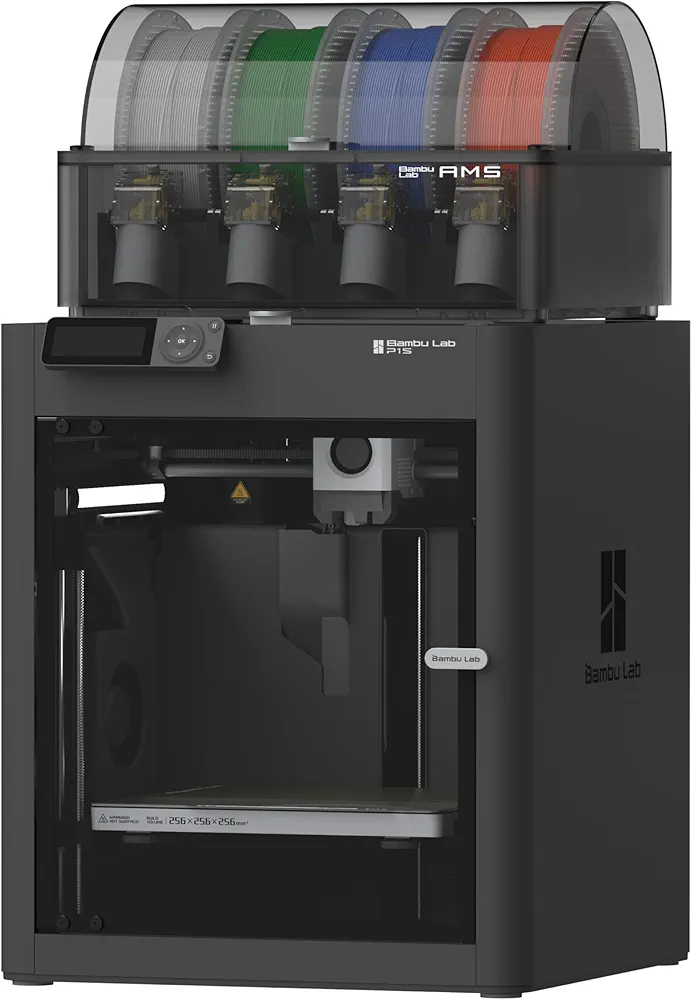
Bambu Lab P1S Combo Multicolor Enclosed 3D Printer with AMS
 Save 25%
ELEGOO Rapid PETG Filament 1.75mm 4KG High-Speed Printing
 Save 30%
 Save 37%
GIANTARM Silk PLA Filament Gold 1.75mm, 1kg, Vacuum Packed, Tough

FLASHFORGE Adventurer 5M Auto-Leveling 600mm/s 3D Printer
 Save 32%
Overture PETG Filament 1.75mm – Reliable, Clog-Free 3D Printing Filament
 Save 29%
