Raspberry Pi Zero 2 W Mini SBC — Wireless & Bluetooth 512MB Review 2026: Is it Worth It?

Quick Analysis Verdict
"A compact, low-power single-board computer ideal for hobbyists, headless servers and embedded projects; not recommended for desktop replacements or memory‑heavy applications."
Review Methodology
Why this analysis may help before you buy
Rating signal
We weigh star rating together with 1,163 visible reviews so a rating is not judged in isolation.
Buyer momentum
Recent purchase activity and category badges help us identify products shoppers are actively considering.
RefreshBuy score
The score combines performance, quality, value, and ease-of-use signals for this category.
Decision Guide
Is Raspberry Pi Zero 2 W Mini SBC — Wireless & Bluetooth 512MB a good fit for you?
For shoppers comparing Computers & Accessories products, this Raspberry Pi option looks strongest on value with a 9.0/10 signal. The main area to double-check is ease of use, especially if that is your top priority.
Low‑power, headless network services (Pi‑hole, camera/sensor gateways, lightweight IoT controllers) where small size, wireless connectivity and low energy draw matter most.
strong review coverage, 4.2/5 rating, and 200+ recent monthly purchases.
Value score 9.0/10 at $38.54 current tracked price.
Choose it if
You want a Computers & Accessories pick where the strongest measurable signal is value and the current review base is large enough to compare with alternatives.
Compare alternatives if
Your buying decision depends mostly on ease of use, long-term durability, or a lower final checkout price after marketplace changes.
Before buying
Check both Amazon Canada and Amazon US from this detail page, then compare similar Computers & Accessories products below before deciding.
Low‑power, headless network services (Pi‑hole, camera/sensor gateways, lightweight IoT controllers) where small size, wireless connectivity and low energy draw matter most.
Great Value
Good for several years in hobby and embedded roles if powered correctly and kept cool; sudden failures and heat-related issues have been reported, so add proper power filtering and thermal mitigation for mission‑critical use.
Key Buying Points
Quad-core Broadcom BCM2710A1 (ARM Cortex-A53 @1GHz) provides a substantial performance jump over original Zero boards, enabling multi-threaded tasks like Pi-hole, light web services and small automation agents without noticeable lag.
Integrated Wi‑Fi and Bluetooth Low Energy remove the need for external adapters in most wireless or IoT projects, simplifying headless deployments and reducing peripheral clutter.
Tiny 65mm x 30mm form factor and unpopulated 40‑pin GPIO make it ideal for space-constrained enclosures, custom mounts (e.g., camera housings, sensor pods) and embedded gadgetry.
Single micro USB OTG port plus USB‑2.0 device capability allows USB peripherals via adapters or small hubs — practical for keyboards, cameras, or serial adapters for console access on the go.
Boot from microSD with broad community-supported OS images (Raspberry Pi OS variants and many ARM Linux distros) and abundant documentation accelerates prototyping and reduces setup friction.
Low idle power draw and small footprint suit always-on use cases (network ad‑blocking, telemetry collectors, lightweight edge compute) where energy efficiency matters.
Strong maker ecosystem — cases, HATs, camera ribbons and 3D-printable enclosures are widely available, enabling fast physical customization and integration into projects.
Good price-to-capability ratio: for single-purpose or headless tasks you get quad-core performance and wireless connectivity at a very low cost compared with larger SBCs.
The Catch
Overheating under sustained CPU/GPU load has been reported — without passive or active cooling the board can thermal-throttle or exhibit glitches during long-running tasks.
Limited 512MB RAM constrains multitasking, browser-based desktop use, containers and memory-hungry server workloads — swap usage will impact longevity of the microSD.
The 40‑pin GPIO header is typically unpopulated; many HATs require soldering or adapters, adding assembly work for less experienced users.
Headless boot image incompatibilities have caused confusion for some users (no LED activity with an incompatible image) — you must use compatible Raspberry Pi OS images and follow headless setup steps.
Single micro‑USB power/data port requires adapters or hubs for multiple USB peripherals, complicating set-ups that need simultaneous wired network and USB devices.
Performance Scorecard
Common Questions & Expert Insights
Q: Can I run Pi‑hole on the Raspberry Pi Zero 2 W reliably? ▼
Q: Does the board overheat during continuous workloads? ▼
Q: Is 512MB RAM enough for desktop use or containers? ▼
Q: Which operating systems are compatible with the Zero 2 W? ▼
Q: Can I use the Raspberry Pi Camera Module with this board? ▼
Q: Are HATs and GPIO add‑ons plug‑and‑play? ▼
Q: How do I avoid headless boot image problems where the Pi shows no LEDs? ▼
Q: What power and cooling setup should I use for 24/7 operation? ▼
Q: How does the Zero 2 W compare to the original Zero W? ▼
Q: Can the Zero 2 W replace a Raspberry Pi 4 for home server tasks? ▼
You May Also Like
Top-rated alternatives in Computers & Accessories

 Save 40%
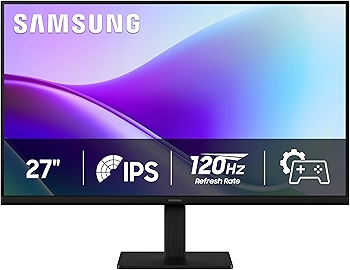
Samsung LS27F320GANXZA 27-Inch IPS FHD 120Hz Monitor with Game Mode
 Save 40%
 Save 29%
Samsung 9100 PRO 1TB PCIe 5.0 x4 NVMe M.2 SSD - Thermal Control
 Save 23%
TP-Link RE550 AC1900 WiFi Extender - Wide Coverage, 2.8k Sq Ft, 35 Devices
 Save 26%
Logitech Brio 101 Full HD 1080p Webcam with Privacy Shutter

Logitech MK270 Wireless Keyboard and Mouse Combo – Long Battery Life, Quiet Typing
 Save 32%