BDDFOTO 12FT Heat Tape for Pipe Freeze Protection 8W/FT Review 2026: Is it Worth It?

Quick Analysis Verdict
"Good for homeowners, RV owners, and gardeners who need a simple plug-and-play pipe freeze protection solution; not for submerged, permanently buried, or commercial/compliance-driven installations."
Review Methodology
Why this analysis may help before you buy
Rating signal
We weigh star rating together with 604 visible reviews so a rating is not judged in isolation.
Buyer momentum
Recent purchase activity and category badges help us identify products shoppers are actively considering.
RefreshBuy score
The score combines performance, quality, value, and ease-of-use signals for this category.
Decision Guide
Is BDDFOTO 12FT Heat Tape for Pipe Freeze Protection 8W/FT a good fit for you?
For shoppers comparing Plumbing products, this BDDFOTO option looks strongest on ease of use with a 8.0/10 signal. The main area to double-check is quality, especially if that is your top priority.
Protecting short, exposed above-ground water lines, RV hoses, downspouts, and external faucets where a quick, adaptive heating solution is needed.
limited-but-useful review coverage, 4.6/5 rating, and 50+ recent monthly purchases.
Value score 6.0/10 at $36.99 current tracked price.
Choose it if
You want a Plumbing pick where the strongest measurable signal is ease of use and the current review base is large enough to compare with alternatives.
Compare alternatives if
Your buying decision depends mostly on quality, long-term durability, or a lower final checkout price after marketplace changes.
Before buying
Check both Amazon Canada and Amazon US from this detail page, then compare similar Plumbing products below before deciding.
Protecting short, exposed above-ground water lines, RV hoses, downspouts, and external faucets where a quick, adaptive heating solution is needed.
Fair
Moderate — expect multiple winter seasons (roughly 3–7 years) when mounted out of direct UV/abrasion exposure; longevity depends on proper securing, avoiding mechanical damage, and protection from constant flexing.
Key Buying Points
Self-regulating thermal control: built-in temperature sensor turns the cable ON below ~5°C and OFF above ~15°C, which reduces energy draw during mild conditions and increases heat output as ambient temperature drops.
IP65-rated outer jacket: resists rain and snow and allows outdoor exposure on exposed runs, downspouts, and hoses without immediate water ingress concerns.
Robust internal construction: pure copper core and steel-wire winding around the heating element provide mechanical protection and reliable thermal conduction compared with cheaper stranded designs.
Pre-assembled, flexible mounting: supplied as a ready-to-use 12 ft heating cable with a 3 ft power lead that can be run linearly or in a spiral to concentrate heat where needed, speeding installation for DIY users.
High linear heat output: ~8 W/ft design provides aggressive heat for short, exposed sections (e.g., hose bibs, RV lines) to combat freeze risk faster than low-wattage tapes.
Insulated and sealed ends: factory-insulated termination reduces immediate failure points and simplifies outdoor installation without field-sealing.
Plug-and-play convenience: no separate controller required — the on-board thermostat and simple plug make it accessible for non-technical users while still delivering adaptive heating.
The Catch
Limited length: 12 ft may be too short for many whole-run pipe applications, forcing multiple runs or extensions that complicate installation and increase failure points.
Not rated for immersion or burial: IP65 protects against splashes but does not allow submersion or long-term buried installations — unsuitable where pipes are below grade or submerged.
Sparse safety documentation: product spec sheet omits UL/ETL certification details and a dedicated GFCI-protected plug, raising questions for code-sensitive or commercial installs.
Overlap risks: while the product claims overlapping is possible, overlapping increases localized heat and can accelerate jacket wear or create hot spots if not carefully monitored.
Short power lead: the 3-foot power cord often requires a weatherproof extension or repositioning of power source, adding cost and potential trip/connection hazards.
Performance Scorecard
Common Questions & Expert Insights
Q: Will this heat tape prevent pipes from freezing in very low temperatures (e.g., -20°C / -4°F)? ▼
Q: Can I use this heating tape on buried or submerged water pipes? ▼
Q: Is overlapping the tape during installation safe and does it improve heating? ▼
Q: Can I cut the heating tape to make it shorter for my application? ▼
Q: Will this tape work on plastic pipes like PEX as well as metal pipes? ▼
Q: Do I need a GFCI-protected outlet to use this product? ▼
Q: How often should I inspect the heat tape for wear or damage? ▼
Q: Can I leave the heating tape plugged in year-round? ▼
Q: How does this product compare to commercial heat-trace systems with external controllers? ▼
Q: Is this better than cheaper non-thermostatic heat tapes? ▼
You May Also Like
Top-rated alternatives in Plumbing
 Save 33%
Delta RP46074 MultiChoice 13/14 Series Cartridge Assembly
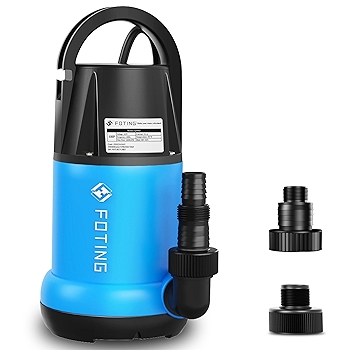
FOTING 1HP Submersible Water Pump - Clean/Dirty Water, 4500GPH

AQUASTRONG 1HP Sump Pump 4500 GPH Submersible with 10ft Cord

YOUHO 5.9 Inch Anti-Clockwise Portable AC Exhaust Hose 15-80 Inch

Cinola Upgraded Dual-Handle Wall-Mounted Toilet Plunger with Holder

LUTICO Drain Snake Hair Clog Remover for Sink, Shower, Tub

 Save 25%