Deeplee PLA 1.75mm Filament ±0.02mm Vacuum-Sealed 1kg Review 2026: Is it Worth It?

Quick Analysis Verdict
"A budget-conscious but accurate PLA spool for hobbyists and pros who need consistent 1.75mm feed; not the best choice for high-temperature or load-bearing functional parts."
Review Methodology
Why this analysis may help before you buy
Rating signal
We weigh star rating together with 1,995 visible reviews so a rating is not judged in isolation.
Buyer momentum
Recent purchase activity and category badges help us identify products shoppers are actively considering.
RefreshBuy score
The score combines performance, quality, value, and ease-of-use signals for this category.
Decision Guide
Is Deeplee PLA 1.75mm Filament ±0.02mm Vacuum-Sealed 1kg a good fit for you?
For shoppers comparing 3D Printing & Scanning products, this Deeplee option looks strongest on value with a 8.0/10 signal. The main area to double-check is performance, especially if that is your top priority.
Accurate general-purpose PLA prints — prototyping, cosmetic parts, and hobby models where consistent diameter and clog-free feeding reduce failed prints.
strong review coverage, 4.4/5 rating, and 50+ recent monthly purchases.
Value score 8.0/10 at $18.99 with 10% savings.
Choose it if
You want a 3D Printing & Scanning pick where the strongest measurable signal is value and the current review base is large enough to compare with alternatives.
Compare alternatives if
Your buying decision depends mostly on performance, long-term durability, or a lower final checkout price after marketplace changes.
Before buying
Check both Amazon Canada and Amazon US from this detail page, then compare similar 3D Printing & Scanning products below before deciding.
Accurate general-purpose PLA prints — prototyping, cosmetic parts, and hobby models where consistent diameter and clog-free feeding reduce failed prints.
Great Value
Moderate to good — the PLA material itself is stable long-term if stored dry, but the cardboard spool and potential seal damage reduce practical shelf robustness.
Key Buying Points
Dimensional accuracy ±0.02 mm — tighter diameter control reduces under/over-extrusion and improves first-layer reliability on most FDM printers.
Vacuum-sealed and fully dried — limits moisture reabsorption during storage and lowers the chance of steam-induced voids and nozzle clogs.
Tangle-free mechanical winding — consistent spool tension produces smoother filament feed, especially beneficial on Bowden setups.
Optimized melt stability and interlayer adhesion — formulation balances rigidity and impact resistance for cleaner surfaces and stronger bonds between layers.
Wide recommended print window (190–230°C, bed 35–65°C) — compatible with common printer profiles and standard nozzles, reducing tuning time.
Cardboard spool design is recyclable and lightweight — easier to ship and eco-friendlier than plastic spools while remaining compatible with many spool holders.
Clog- and bubble-reduction processes — manufacturing claims (advanced interlayer adhesion and flow design) translate to fewer extrusion artefacts in routine prints.
The Catch
Cardboard spool durability — cardboard spools can deform or warp when exposed to humidity or heavy axial loads, causing wobble on some spool holders.
PLA material limits — standard PLA has low heat resistance and brittle behavior under sustained load; unsuitable for high-temp or mechanically stressed parts.
Vacuum-pack reliance — performance depends on intact vacuum sealing; a damaged seal or long-open storage without desiccant will degrade print quality.
Limited premium finishing options — lacks specialized blends (e.g., silk, wood-fill, carbon) and may not match finish variety offered by higher-tier brands.
Marketing tolerance claims may vary in practice — ±0.02 mm is strong on paper, but spool-to-spool variation can still occur in real-world runs.
Performance Scorecard
Common Questions & Expert Insights
Q: Will this filament clog my nozzle? ▼
Q: Is this filament suitable for functional parts requiring heat resistance? ▼
Q: Will the spool fit my printer's spool holder? ▼
Q: Is the 1.75mm diameter tolerance reliable? ▼
Q: What printing settings should I start with? ▼
Q: Is this filament compatible with Bowden and direct-drive extruders? ▼
Q: How should I store the spool after opening? ▼
Q: Can I dry this filament at home if it absorbs moisture? ▼
Q: How does Deeplee PLA compare to premium brands? ▼
Q: Is this better than inexpensive generic PLA? ▼
You May Also Like
Top-rated alternatives in 3D Printing & Scanning
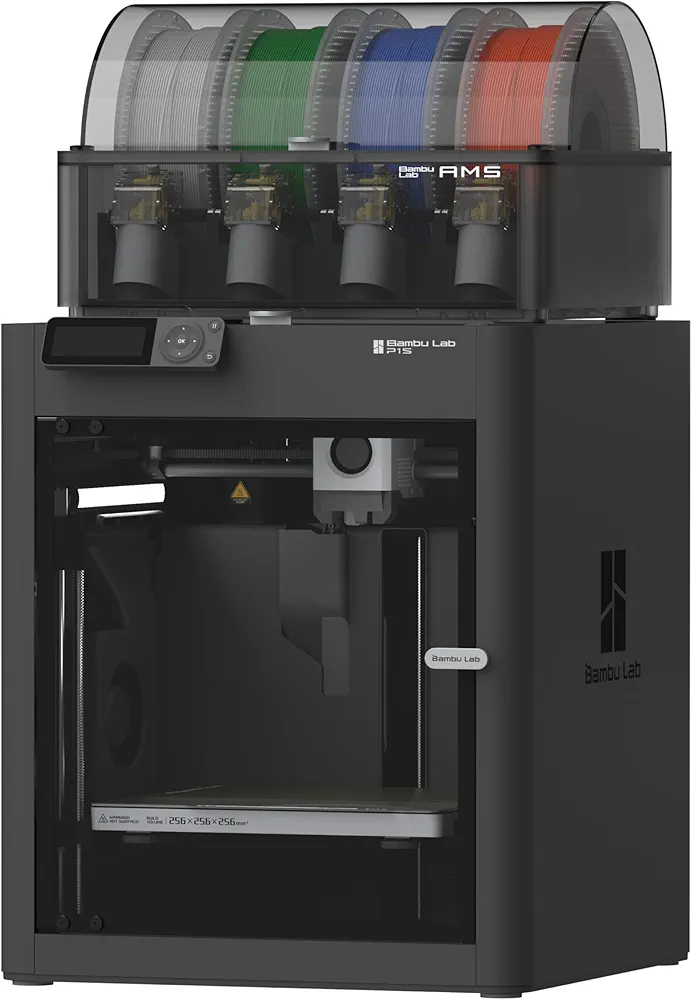
Bambu Lab P1S Combo Multicolor Enclosed 3D Printer with AMS
 Save 25%
ELEGOO Rapid PETG Filament 1.75mm 4KG High-Speed Printing
 Save 30%
 Save 37%
GIANTARM Silk PLA Filament Gold 1.75mm, 1kg, Vacuum Packed, Tough

FLASHFORGE Adventurer 5M Auto-Leveling 600mm/s 3D Printer
 Save 32%
Overture PETG Filament 1.75mm – Reliable, Clog-Free 3D Printing Filament
 Save 29%
