3DHoJor PLA Pro 1.75mm Filament – High-Precision Cardboard Spool Review 2026: Is it Worth It?

Quick Analysis Verdict
"Well-suited for hobbyists and small-scale pros who want a matte, low-odor PLA with tight dimensional control; avoid if you need industrial high-temp parts or guaranteed perfectly wound spools every time."
Review Methodology
Why this analysis may help before you buy
Rating signal
We weigh star rating together with 3,832 visible reviews so a rating is not judged in isolation.
Buyer momentum
Recent purchase activity and category badges help us identify products shoppers are actively considering.
RefreshBuy score
The score combines performance, quality, value, and ease-of-use signals for this category.
Decision Guide
Is 3DHoJor PLA Pro 1.75mm Filament – High-Precision Cardboard Spool a good fit for you?
For shoppers comparing 3D Printing & Scanning products, this 3DHoJor option looks strongest on performance with a 8.0/10 signal. The main area to double-check is quality, especially if that is your top priority.
Aesthetic prototypes and functional hobby parts where matte finish, dimensional precision and low-odor printing matter most.
strong review coverage, 4.3/5 rating, and 100+ recent monthly purchases.
Value score 8.0/10 at $18.99 current tracked price.
Choose it if
You want a 3D Printing & Scanning pick where the strongest measurable signal is performance and the current review base is large enough to compare with alternatives.
Compare alternatives if
Your buying decision depends mostly on quality, long-term durability, or a lower final checkout price after marketplace changes.
Before buying
Check both Amazon Canada and Amazon US from this detail page, then compare similar 3D Printing & Scanning products below before deciding.
Aesthetic prototypes and functional hobby parts where matte finish, dimensional precision and low-odor printing matter most.
Great Value
Printed parts last like typical PLA indoors (multi-year for non-load-bearing items); spool and packaging require dry storage to maintain lifespan.
Key Buying Points
Dimensional control ±0.03 mm: Tight diameter tolerance reduces flow variation and yields consistent layer lines and reliable extrusion on Bowden and direct-drive setups.
Toughened PLA formula: Improved strength and toughness over standard PLA gives better functional prototypes and less brittle prints while remaining easy to print.
Low shrinkage and strong layer adhesion: Minimizes warping for medium-large parts and produces solid inter-layer bonding for functional models without extra enclosure.
Matte surface finish: Produces low-gloss, plaster-like aesthetic straight off the printer, cutting post-processing time for display models.
Vacuum-sealed with desiccant: Factory dry packaging limits moisture pickup in transit and improves first-print reliability compared with loose-packed spools.
Wide printer compatibility: Works across popular FDM models (Ender, Prusa, Anycubic, Creality K1, AnkerMake, Voron, etc.), reducing dial-in time for most hobby printers.
Eco-friendly spool and low odor: Cardboard spool and biobased PLA source reduce lifecycle impact and make the filament more pleasant to print indoors.
The Catch
Inconsistent spool winding reported: Several users experienced badly rolled/tangled spools that required re-rolling mid-print and caused failed long prints.
Strong bed adhesion can be too aggressive: On some build surfaces the filament bonded extremely well, making parts difficult to remove or risking surface damage on removal.
Variable optimal temperature: Users report good prints from 195°C to 215°C depending on printer and color — expect to run temperature towers for new setups.
Cardboard spool durability: Eco spool can deform if stored in humid environments or dropped, potentially causing feed issues on some spool holders.
Not a replacement for engineering plastics: Improved toughness vs PLA still falls short of PETG/ABS for high-heat or structural outdoor parts.
Performance Scorecard
Common Questions & Expert Insights
Q: Will this filament jam or clog my nozzle? ▼
Q: Is this filament compatible with Creality Ender 3 and similar hobby printers? ▼
Q: Will this material withstand outdoor heat or mechanical stress? ▼
Q: What nozzle and bed temperature range should I use? ▼
Q: Is the stated diameter tolerance reliable for precision prints? ▼
Q: Will this filament adhere well to common build plates? ▼
Q: How should I store the filament after opening? ▼
Q: Does the filament require pre-drying before printing? ▼
Q: How does PLA Pro compare to standard PLA for surface finish? ▼
Q: Should I choose this PLA Pro or switch to PETG for stronger parts? ▼
You May Also Like
Top-rated alternatives in 3D Printing & Scanning
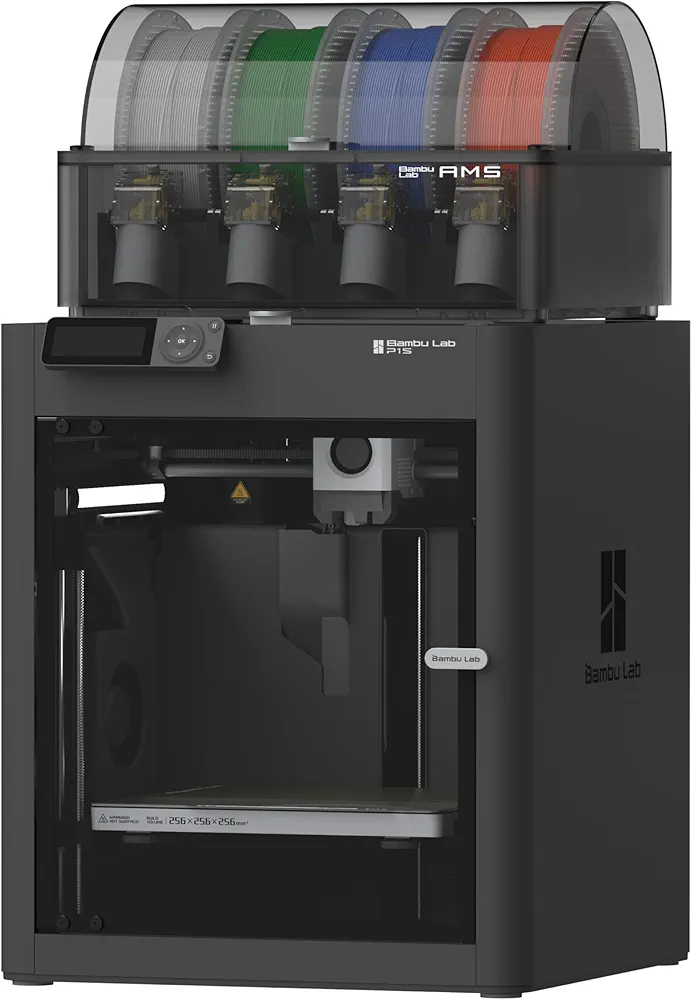
Bambu Lab P1S Combo Multicolor Enclosed 3D Printer with AMS
 Save 25%
ELEGOO Rapid PETG Filament 1.75mm 4KG High-Speed Printing
 Save 30%
 Save 37%
GIANTARM Silk PLA Filament Gold 1.75mm, 1kg, Vacuum Packed, Tough
 Save 32%
Overture PETG Filament 1.75mm – Reliable, Clog-Free 3D Printing Filament
 Save 29%

 Save 46%