SUNLU PLA 1.75mm Filament — Neat-Wound, ±0.02mm, Vacuum 1kg Review 2026: Is it Worth It?

Quick Analysis Verdict
"Well-suited for hobbyists and pros who want budget-friendly, consistent PLA for general FDM printing; not for users who require specialty or highly abrasive materials."
Review Methodology
Why this analysis may help before you buy
Rating signal
We weigh star rating together with 1,817 visible reviews so a rating is not judged in isolation.
Buyer momentum
Recent purchase activity and category badges help us identify products shoppers are actively considering.
RefreshBuy score
The score combines performance, quality, value, and ease-of-use signals for this category.
Decision Guide
Is SUNLU PLA 1.75mm Filament — Neat-Wound, ±0.02mm, Vacuum 1kg a good fit for you?
For shoppers comparing 3D Printing & Scanning products, this SUNLU option looks strongest on value with a 9.0/10 signal. The main area to double-check is quality, especially if that is your top priority.
Everyday FDM prototyping and aesthetic prints where consistent diameter and low cost matter more than specialty material properties.
strong review coverage, 4.2/5 rating, and 50+ recent monthly purchases.
Value score 9.0/10 at $22.99 current tracked price.
Choose it if
You want a 3D Printing & Scanning pick where the strongest measurable signal is value and the current review base is large enough to compare with alternatives.
Compare alternatives if
Your buying decision depends mostly on quality, long-term durability, or a lower final checkout price after marketplace changes.
Before buying
Check both Amazon Canada and Amazon US from this detail page, then compare similar 3D Printing & Scanning products below before deciding.
Everyday FDM prototyping and aesthetic prints where consistent diameter and low cost matter more than specialty material properties.
Great Value
Moderate to Good — PLA material will remain printable for months to a few years if kept vacuum-sealed or in low-humidity storage; spool hub durability has occasional failures reported.
Key Buying Points
Diameter consistency ±0.02mm: Tight tolerance reduces under/over-extrusion swings and delivers smoother surface finish and dimensional repeatability across multi-part prints.
Neat-wound spool system: Factory winding minimizes tangles and unexpected feeder stops, improving uptime on unattended prints and AMS systems when spool integrity is good.
Vacuum-sealed packaging: Factory vacuum and desiccant lower moisture pickup during storage and transit, reducing brittle filament and extrusion popping on first prints.
Clog- and bubble-reduction process: Formulation and QC aimed at low bubbles and stable melt flow produce cleaner extrusion and fewer nozzle clogs for standard brass/hardened nozzles.
Wide compatibility: Engineered for common FDM printers and 1.75mm feeders, with recommended temp range (200–230°C) and bed temps (50–65°C) that match most PLA profiles.
Reliable layer adhesion: Material chemistry favors adhesion between layers, which reduces delamination risk on medium-detail prints and functional prototypes.
Good value-per-kg: Market positioning balances consistent printability and accessible pricing, making it economical for iterative prototyping and volume prints.
The Catch
Occasional spool damage or cracked hubs reported: Physical spool breakage can render the spool unusable in AMS systems or cause mid-print failures.
Batch-to-batch winding variability: Some batches have looser winding leading to tangles and printer filament-pause errors—check the first few meters before long prints.
Customer support accessibility issues: A subset of reviews cite difficulty reaching support or broken help links, which slows resolution for defective spools.
Smaller/changed spool formats can surprise buyers: Newer compact spool sizes may not match older spool holders or user expectations unless verified.
Some users needed temperature tuning: While general settings work, a minority had to raise nozzle/bed temps slightly to match their machine’s extrusion profile.
Performance Scorecard
Common Questions & Expert Insights
Q: Will a tangled or damaged spool stop my print mid-job? ▼
Q: Is SUNLU PLA truly clog-free in regular use? ▼
Q: Does this filament come reliably within the stated diameter tolerance? ▼
Q: Will it work in Bambu Lab printers and AMS systems? ▼
Q: Is SUNLU PLA compatible with hardened or brass nozzles? ▼
Q: Will I need to change slicer settings from my current PLA profile? ▼
Q: How should I store the spool after opening to preserve quality? ▼
Q: Does SUNLU PLA require pre-drying before printing? ▼
Q: How does SUNLU PLA compare to premium brand filaments for surface finish? ▼
Q: Is SUNLU PLA better than the cheapest generic PLA rolls? ▼
You May Also Like
Top-rated alternatives in 3D Printing & Scanning
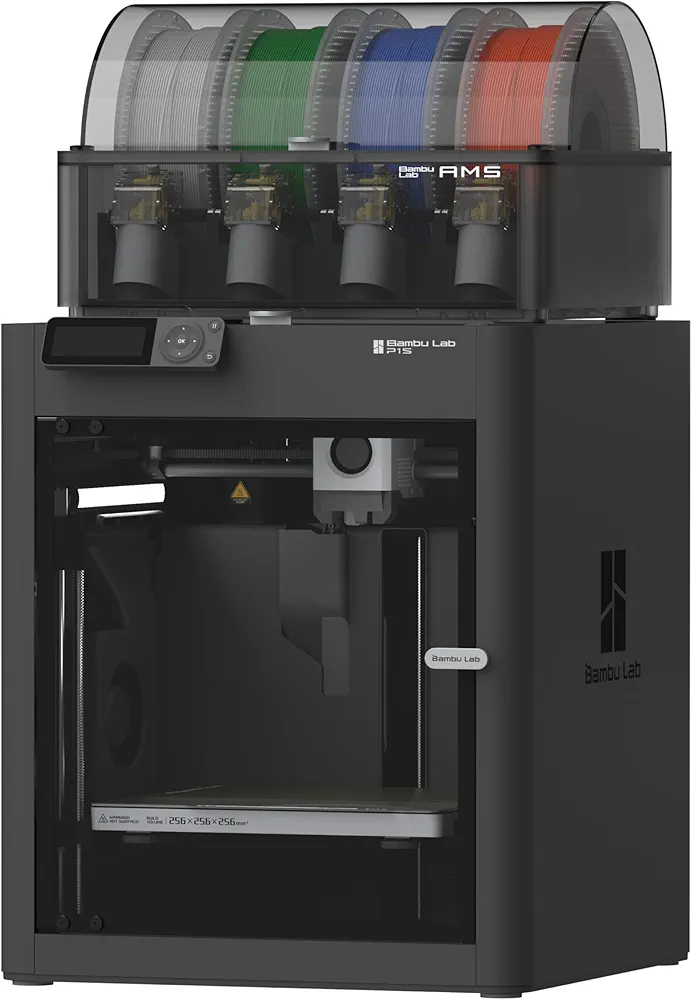
Bambu Lab P1S Combo Multicolor Enclosed 3D Printer with AMS
 Save 25%
ELEGOO Rapid PETG Filament 1.75mm 4KG High-Speed Printing
 Save 30%
 Save 37%
GIANTARM Silk PLA Filament Gold 1.75mm, 1kg, Vacuum Packed, Tough

FLASHFORGE Adventurer 5M Auto-Leveling 600mm/s 3D Printer
 Save 32%
Overture PETG Filament 1.75mm – Reliable, Clog-Free 3D Printing Filament
 Save 29%
