Polymaker Panchroma PLA Grey 1.75mm 1kg High-Speed Formula Review 2026: Is it Worth It?

Quick Analysis Verdict
"A beginner- to mid-level hobbyist filament for fast, low-warp decorative prints; not intended for high-temperature or structural engineering parts."
Review Methodology
Why this analysis may help before you buy
Rating signal
We weigh star rating together with 6,878 visible reviews so a rating is not judged in isolation.
Buyer momentum
Recent purchase activity and category badges help us identify products shoppers are actively considering.
RefreshBuy score
The score combines performance, quality, value, and ease-of-use signals for this category.
Decision Guide
Is Polymaker Panchroma PLA Grey 1.75mm 1kg High-Speed Formula a good fit for you?
For shoppers comparing 3D Printing & Scanning products, this Polymaker option looks strongest on ease of use with a 9.0/10 signal. The main area to double-check is performance, especially if that is your top priority.
Fast decorative models, miniatures, cosplay props and classroom projects where print time and surface appearance matter more than mechanical performance.
very broad review coverage, 4.5/5 rating, and 100+ recent monthly purchases.
Value score 8.0/10 at $23.99 with 5% savings.
Choose it if
You want a 3D Printing & Scanning pick where the strongest measurable signal is ease of use and the current review base is large enough to compare with alternatives.
Compare alternatives if
Your buying decision depends mostly on performance, long-term durability, or a lower final checkout price after marketplace changes.
Before buying
Check both Amazon Canada and Amazon US from this detail page, then compare similar 3D Printing & Scanning products below before deciding.
Fast decorative models, miniatures, cosplay props and classroom projects where print time and surface appearance matter more than mechanical performance.
Great Value
Moderate for indoor/display use (years indoors); poor for continuous outdoor exposure or high-heat applications.
Key Buying Points
High-speed extrusion: Formulated for stable high-rate extrusion (advertised for fast path speeds), so you can dramatically shorten print time on tuned machines without a major loss in visible detail.
Low-warp formulation: Low-warp chemistry and controlled cooling reduce part lifting on open printers, improving first-layer reliability for large display pieces.
Dimensional accuracy: Factory tolerance and consistent diameter deliver near ±0.03mm dimensional accuracy in practice, helping multi-part assemblies and snap-fit models fit more predictably.
Clog-resistant feed: Additives and a clean melt profile make the filament less prone to nozzle jams, lowering failed-print risk for long runs or multi-hour models.
AMS and spool-friendly: Packaged and spooled for wide compatibility with automatic material systems and common desktop spool mounts, easing integration into multi-material workflows.
Beginner-friendly print settings: Runs at standard PLA temperatures and does not require an enclosure, heated bed, or hardened nozzle for typical hobby prints, reducing setup complexity.
Vibrant color range: Available in many shades (including the supplied grey), useful for multi-color projects, cosplays and display models that need consistent visual results.
The Catch
Not structural: As PLA, it lacks long-term heat resistance and impact toughness of engineering plastics—avoid for load-bearing or hot-environment parts.
High-speed tuning required: Achieving advertised top speeds without quality loss usually needs a well-calibrated printer, strong part cooling, and sometimes retraction/pressure tuning.
Surface artifacts at extreme speeds: Very aggressive speed settings can introduce ringing or layer banding that negates the time savings for fine-detail prints.
Outdoor durability limited: Standard PLA is prone to UV and hydrolysis over time—printed parts exposed to sun or humidity will age faster than PETG/ASA.
Batch/color variance: Shade consistency and finish can vary slightly between production runs; color-critical projects may need a single-batch purchase.
Performance Scorecard
Common Questions & Expert Insights
Q: Is Polymaker Panchroma PLA a good choice for load-bearing or heat-exposed parts? ▼
Q: Will printing at the advertised high speeds compromise detail? ▼
Q: Does this PLA clog common brass nozzles and require a hardened nozzle? ▼
Q: Will this filament work with automatic material systems (AMS) and spool feeders? ▼
Q: Can I print this filament without a heated bed or enclosure? ▼
Q: Is this filament compatible with all 1.75mm printer extruders? ▼
Q: How should I store Panchroma PLA to keep it printable? ▼
Q: What post-processing is easiest with this PLA? ▼
Q: How does this PLA compare to PETG for functional prints? ▼
Q: How does Polymaker Panchroma differ from generic budget PLA spools? ▼
You May Also Like
Top-rated alternatives in 3D Printing & Scanning
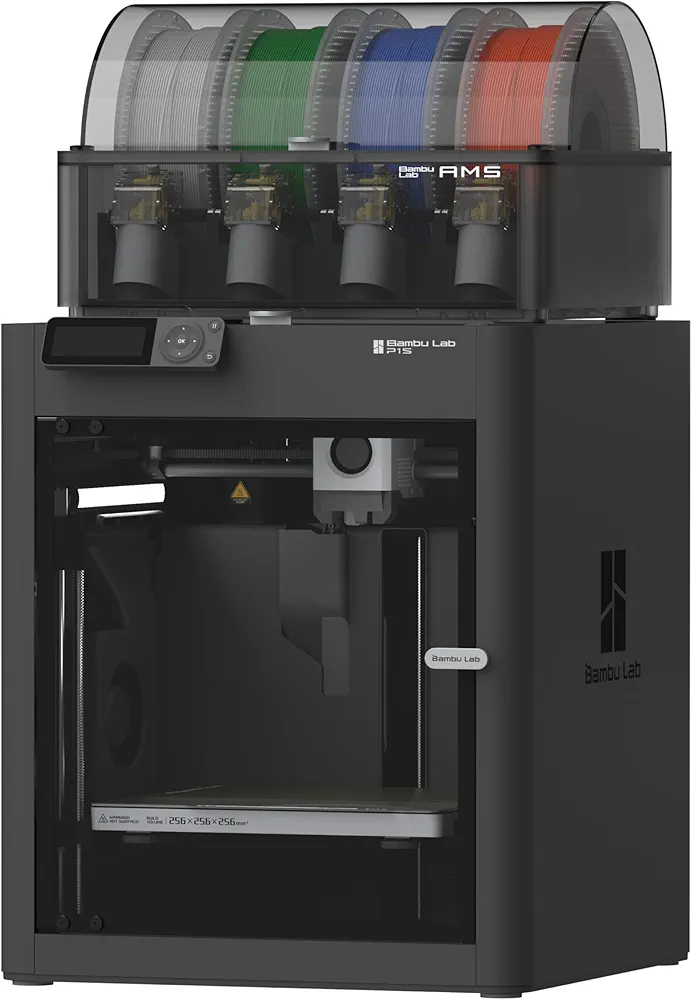
Bambu Lab P1S Combo Multicolor Enclosed 3D Printer with AMS
 Save 25%
ELEGOO Rapid PETG Filament 1.75mm 4KG High-Speed Printing
 Save 30%
 Save 37%
GIANTARM Silk PLA Filament Gold 1.75mm, 1kg, Vacuum Packed, Tough

FLASHFORGE Adventurer 5M Auto-Leveling 600mm/s 3D Printer
 Save 32%
Overture PETG Filament 1.75mm – Reliable, Clog-Free 3D Printing Filament
 Save 29%
