SUNLU PLA Plus 1.75mm 4KG (4x1kg) Tough, Tangle-Free Filament Review 2026: Is it Worth It?

Quick Analysis Verdict
"A bulk PLA+ spool set for hobbyists and small workshops that need tougher-than-standard PLA and reliable, tangle-free feeding; not for users who need high-heat or highly flexible engineering plastics."
Review Methodology
Why this analysis may help before you buy
Rating signal
We weigh star rating together with 867 visible reviews so a rating is not judged in isolation.
Buyer momentum
Recent purchase activity and category badges help us identify products shoppers are actively considering.
RefreshBuy score
The score combines performance, quality, value, and ease-of-use signals for this category.
Decision Guide
Is SUNLU PLA Plus 1.75mm 4KG (4x1kg) Tough, Tangle-Free Filament a good fit for you?
For shoppers comparing 3D Printing & Scanning products, this SUNLU option looks strongest on value with a 9.0/10 signal. The main area to double-check is performance, especially if that is your top priority.
Durable hobby parts, functional prototypes, and larger multi-hour prints where reduced brittleness and consistent feeding matter most.
limited-but-useful review coverage, 4.6/5 rating, and 100+ recent monthly purchases.
Value score 9.0/10 at $59.99 current tracked price.
Choose it if
You want a 3D Printing & Scanning pick where the strongest measurable signal is value and the current review base is large enough to compare with alternatives.
Compare alternatives if
Your buying decision depends mostly on performance, long-term durability, or a lower final checkout price after marketplace changes.
Before buying
Check both Amazon Canada and Amazon US from this detail page, then compare similar 3D Printing & Scanning products below before deciding.
Durable hobby parts, functional prototypes, and larger multi-hour prints where reduced brittleness and consistent feeding matter most.
Great Value
High for indoor use — prints are durable for typical applications but will degrade under sustained heat/UV; spool materials and winding suggest multi-year shelf life if stored dry.
Key Buying Points
Neat winding and spool balance: precision winding minimizes tangles and runouts for long prints and reduces failed jobs on Bowden and direct-drive systems.
Toughness improvement over standard PLA: formulated PLA+ claims higher impact resistance and lower brittleness, making it better for functional prototypes and snap-fit parts.
Dimensional control: manufactured to tight diameter tolerance (advertised ±0.02mm), which improves extrusion consistency and layer adhesion in demanding prints.
Vacuum-sealed, low-moisture packaging: factory-dried and sealed to reduce bubbles and clogging risks right out of the box — useful for long prints and fine nozzles.
Broad printer compatibility: designed for common 1.75mm FDM machines (e.g., Bambu Lab, AnkerMake, Creality) so it works without profile rework on most setups.
Easier printing window: lower recommended extrusion temperatures (210–235°C) and moderate bed temps (55–65°C) simplify bed adhesion and reduce warping versus higher-temp materials.
Bulk value and consistent color: four 1kg spools give continuous supply for longer runs and spare spools for iteration without color/finish shifts between batches.
The Catch
Limited thermal resistance: as PLA-based material, prints will soften or deform near hot environments (e.g., car interiors or direct sunlight) — not a replacement for high-temp plastics.
Not a substitute for flexible or chemical-resistant filaments: PLA+ improves toughness but remains rigid and has poorer chemical/solvent resistance than TPU, PETG, or Nylon.
Potential for occasional impurities: while diameter control is tight, some users may encounter surface specks or dust that require a filament cleaner for ultra-fine nozzles.
White-only pack limits color options: the 4-pack in this SKU is all white, so multi-color projects require purchasing additional color variants.
Drying may still be needed for humid conditions: although sealed, once opened the filament is hygroscopic — long storage without desiccant can degrade print quality.
Performance Scorecard
Common Questions & Expert Insights
Q: Can I use SUNLU PLA+ for structural parts that must not break? ▼
Q: Will the filament tangle mid-print and ruin long prints? ▼
Q: Is clogging a common problem with this SUNLU PLA+ on fine nozzles? ▼
Q: Will this filament work with Bambu Lab, AnkerMake or Creality printers? ▼
Q: What nozzle and bed temperature should I use for best results? ▼
Q: Is SUNLU PLA+ suitable for both direct-drive and Bowden extruders? ▼
Q: How should I store opened spools to keep print quality? ▼
Q: Do I need to dry the filament before printing straight from the box? ▼
Q: How does SUNLU PLA+ compare to standard PLA for strength and surface finish? ▼
Q: Should I choose SUNLU PLA+ over PETG or ABS for functional parts? ▼
You May Also Like
Top-rated alternatives in 3D Printing & Scanning
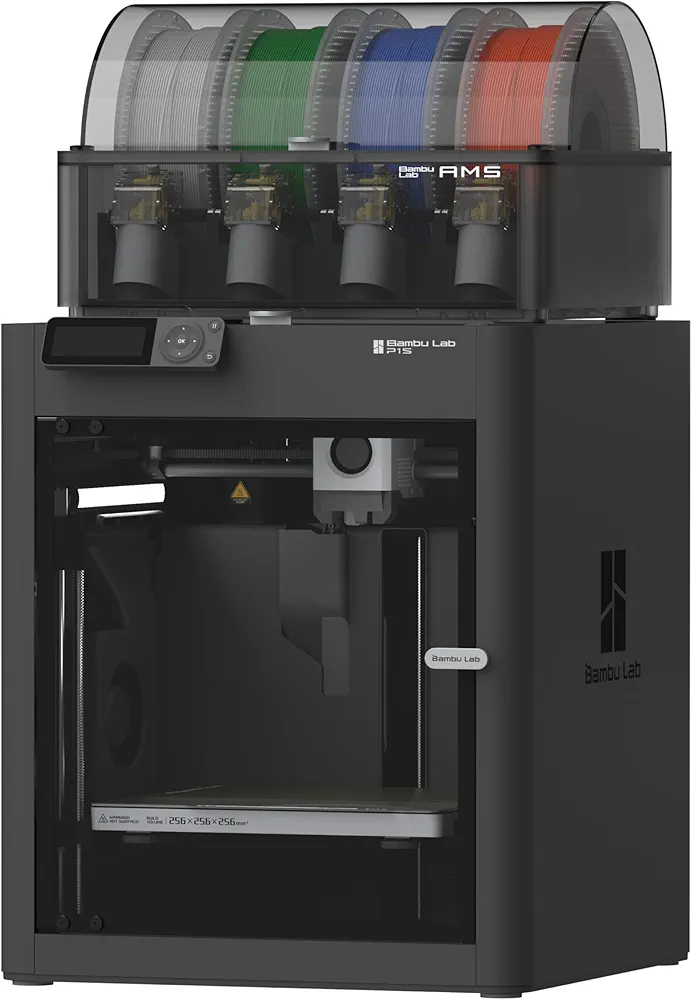
Bambu Lab P1S Combo Multicolor Enclosed 3D Printer with AMS
 Save 25%
ELEGOO Rapid PETG Filament 1.75mm 4KG High-Speed Printing
 Save 30%
 Save 37%
GIANTARM Silk PLA Filament Gold 1.75mm, 1kg, Vacuum Packed, Tough

FLASHFORGE Adventurer 5M Auto-Leveling 600mm/s 3D Printer
 Save 32%
Overture PETG Filament 1.75mm – Reliable, Clog-Free 3D Printing Filament
 Save 29%
