iSpring F3WGB32BM 3-Stage Iron & Manganese Whole-House Filter Review 2026: Is it Worth It?

Quick Analysis Verdict
"Good choice for homeowners with well or municipal water needing whole-house iron, sediment and chlorine control; not for users who need TDS reduction or point-of-use RO-level purity."
Review Methodology
Why this analysis may help before you buy
Rating signal
We weigh star rating together with 1,345 visible reviews so a rating is not judged in isolation.
Buyer momentum
Recent purchase activity and category badges help us identify products shoppers are actively considering.
RefreshBuy score
The score combines performance, quality, value, and ease-of-use signals for this category.
Decision Guide
Is iSpring F3WGB32BM 3-Stage Iron & Manganese Whole-House Filter a good fit for you?
For shoppers comparing Kitchen & Bathroom Fixtures products, this iSpring option looks strongest on performance with a 8.0/10 signal. The main area to double-check is ease of use, especially if that is your top priority.
Whole-house pretreatment for well or municipal systems with iron, manganese, chlorine or sediment that need appliance protection and improved tap taste without removing TDS.
strong review coverage, 4.6/5 rating, and 100+ recent monthly purchases.
Value score 8.0/10 at $164.99 with 15% savings.
Choose it if
You want a Kitchen & Bathroom Fixtures pick where the strongest measurable signal is performance and the current review base is large enough to compare with alternatives.
Compare alternatives if
Your buying decision depends mostly on ease of use, long-term durability, or a lower final checkout price after marketplace changes.
Before buying
Check both Amazon Canada and Amazon US from this detail page, then compare similar Kitchen & Bathroom Fixtures products below before deciding.
Whole-house pretreatment for well or municipal systems with iron, manganese, chlorine or sediment that need appliance protection and improved tap taste without removing TDS.
Great Value
Sediment stage: typically 4–8 months in average wells; carbon and catalytic stages: 8–18 months depending on load. Catalytic media shows longer lifespan than greensand if installation and prefiltration are correct.
Key Buying Points
Three-stage design (polypropylene sediment + coconut-shell carbon block + catalytic iron/manganese media) — delivers 5-micron sediment capture, chlorine reduction and catalytic iron/manganese treatment for clearer water and reduced staining in appliances.
Catalytic media for iron/manganese — media is not consumed like greensand, improving longevity in real-world well conditions and reducing frequency of media replacement/regeneration.
High cartridge capacity claimed (~100k gallons per stage) with whole-house flow compatibility — users report sustained house pressure and year-plus service life in moderate contamination scenarios.
Standard housing compatibility — fits common 20" x 4.5" whole-house housings so it replaces OEM cartridges without plumbing rework for most systems.
Protects appliances and plumbing — real users report substantial reduction in rust staining and extended life of washers/dishwashers when installed upstream of appliances.
Individually wrapped cartridges and straightforward swap-out — reduces contamination risk during storage/handling and simplifies timed replacement cycles.
Responsive U.S.-based support and troubleshooting — multiple reviews cite helpful technical support that resolved early installation or sealing issues.
The Catch
Packaging/assembly risk — reviewers reported loose caps or missing plastic wrap on the iron/manganese cartridge, which can allow media escape if not inspected before installation.
Installation sensitivity — improper seating or a compromised first-stage sediment seal can fouI the iron media prematurely; proper sealing and flushing are critical to avoid early failure.
Does not remove TDS — unlike RO systems this set preserves dissolved minerals; not suitable if you need total dissolved solids reduction.
Variable filter life depending on feed water — heavily loaded wells can force sediment changes every few months; expect shorter intervals with high iron/silt loads.
Lacks small accessories — reviewers note absence of a silicone lubricant packet for O-rings and no label stickers for service dates, which adds minor friction to maintenance.
Potential for pressure drop near end-of-life — some users report reduced household pressure when cartridges are heavily fouled, requiring timely replacement.
Performance Scorecard
Common Questions & Expert Insights
Q: Will this filter remove iron and manganese from my well? ▼
Q: Can this set handle very hard water or high TDS? ▼
Q: Is this a direct fit for standard whole-house housings? ▼
Q: What flow rate and pressure impact should I expect? ▼
Q: Is the product NSF certified? ▼
Q: Will the first stage remove fine sediment? ▼
Q: How often should I replace these cartridges? ▼
Q: Any tips for installation and maintenance? ▼
Q: How does this catalytic media compare to greensand? ▼
Q: Is this a better whole-home option than installing an RO system? ▼
You May Also Like
Top-rated alternatives in Kitchen & Bathroom Fixtures
 Save 23%
iSpring RCC7AK 6-Stage RO System with pH+ Remineralization
 Save 76%
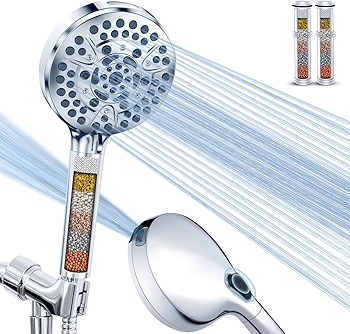
PALAS High Pressure 10-Mode Handheld Shower Head with Built-in Filter – Power Wash, 60-Inch Hose, Chrome


Arofa Handheld Bidet Sprayer with Adjustable Water Pressure

 Save 36%
ICEPURE ADQ747935 Replacement Water & Air Filter for LG Refrigerators – OEM-Equivalent Performance at Great Value

SAMODRA Ultra-Slim Bidet with Dual Nozzles Frontal and Rear Wash
 Save 30%