PUREPLUS 1-Micron CTO 10x2.5in Whole-House Carbon Filter Review 2026: Is it Worth It?

Quick Analysis Verdict
"Best for households on municipal/tap water needing reliable chlorine and sediment reduction in standard 10x2.5in housings; not suitable as a microbiological or heavy iron/sulfur solution for untreated well water."
Review Methodology
Why this analysis may help before you buy
Rating signal
We weigh star rating together with 7,211 visible reviews so a rating is not judged in isolation.
Buyer momentum
Recent purchase activity and category badges help us identify products shoppers are actively considering.
RefreshBuy score
The score combines performance, quality, value, and ease-of-use signals for this category.
Decision Guide
Is PUREPLUS 1-Micron CTO 10x2.5in Whole-House Carbon Filter a good fit for you?
For shoppers comparing Kitchen & Bathroom Fixtures products, this PUREPLUS option looks strongest on value with a 9.0/10 signal. The main area to double-check is performance, especially if that is your top priority.
City or municipally supplied homes seeking an affordable, certified CTO carbon block replacement for chlorine, taste and sediment control in standard 10x2.5in housings.
very broad review coverage, 4.5/5 rating, and 50+ recent monthly purchases.
Value score 9.0/10 at $40.99 with 5% savings.
Choose it if
You want a Kitchen & Bathroom Fixtures pick where the strongest measurable signal is value and the current review base is large enough to compare with alternatives.
Compare alternatives if
Your buying decision depends mostly on performance, long-term durability, or a lower final checkout price after marketplace changes.
Before buying
Check both Amazon Canada and Amazon US from this detail page, then compare similar Kitchen & Bathroom Fixtures products below before deciding.
City or municipally supplied homes seeking an affordable, certified CTO carbon block replacement for chlorine, taste and sediment control in standard 10x2.5in housings.
Great Value
Moderate — typical service life 3–6 months under average tap-water conditions; shortened significantly by heavy sediment or high contaminant load.
Key Buying Points
CTO Carbon Block Media: One-micron carbon block removes chlorine, sediment and color more effectively than granular carbon, yielding noticeably better taste and clarity in tap water.
Broad Compatibility: Designed for standard 10x2.5in filter housings and cross-compatible with many OEM models, making it an easy drop-in replacement for common whole-house and under-sink systems.
High Contaminant Capacity: Rated (manufacturer claim) for high capacity—engineered to treat large volumes between changes, reducing replacement frequency for average households.
Certified & Food-Grade Materials: Multiple certifications (IAPMO, TUV, ROHS, REACH, BPA-free, EC1935) and food-grade materials reduce regulatory risk for potable water use.
Manufacturing QA: Produced under ISO9001 processes with pressure and water-hammer testing, indicating robust build and lower risk of catastrophic failure in typical plumbing setups.
Better Taste Performance vs Standard Filters: Reviews and product claims show stronger chlorine and particulate removal versus many generic replacements, giving perceptible improvement in drinking water.
Low-Contamination Packaging: Filters are individually packaged, reducing shipping contamination and making staged replacements simpler.
Predictable Lifecycle: Manufacturer guidance and user reports give a straightforward 3–6 month replacement cadence under normal household conditions, aiding maintenance planning.
The Catch
Not for Microbial Contamination: This carbon CTO is not rated to remove bacteria, viruses, or make biologically unsafe well water safe — a deal-breaker for untreated sources.
Limited Odor Performance for Hydrogen Sulfide: Several users report the filter struggles to eliminate strong sulfur/rotten-egg odors; sulfur often needs targeted catalytic media.
Reduced Flow vs Coarser Cartridges: The finer one-micron media reduces turbidity but can noticeably lower flow rate compared with 5-micron or spun filters — may require storage/collection or larger prefilter.
Variable Lifespan by Water Quality: Heavy sediment or high chlorine loads will shorten service life well below advertised capacity, increasing replacement frequency and cost.
Occasional Removal Difficulty: Some users note the physical removal of old cartridges can be tricky in tight housings — expect a short DIY learning curve and basic tools.
Not a Single-Solution for Well Water: Performance claims target tap/municipal water; for iron, manganese, or biological issues, additional/alternative media are required.
Performance Scorecard
Common Questions & Expert Insights
Q: Will this cartridge make my well water microbiologically safe? ▼
Q: Does this filter fit standard housings and common OEM models? ▼
Q: Can this remove hydrogen sulfide (sulfur) odors? ▼
Q: Is this cartridge suitable as a pre-filter for reverse-osmosis systems? ▼
Q: Will it reduce chlorine taste and color in drinking water? ▼
Q: Are the materials and production certifications trustworthy? ▼
Q: How often should I replace this cartridge? ▼
Q: What flushing or priming is required after installation? ▼
Q: How does this compare to a 5-micron carbon filter? ▼
Q: Is carbon block better than granular activated carbon (GAC)? ▼
You May Also Like
Top-rated alternatives in Kitchen & Bathroom Fixtures
 Save 23%
iSpring RCC7AK 6-Stage RO System with pH+ Remineralization
 Save 76%
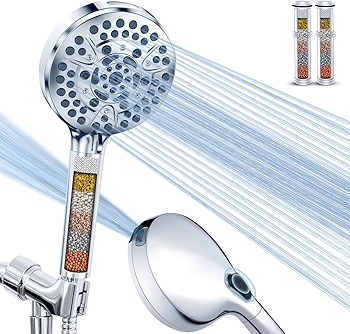
PALAS High Pressure 10-Mode Handheld Shower Head with Built-in Filter – Power Wash, 60-Inch Hose, Chrome


Arofa Handheld Bidet Sprayer with Adjustable Water Pressure

 Save 36%
ICEPURE ADQ747935 Replacement Water & Air Filter for LG Refrigerators – OEM-Equivalent Performance at Great Value

SAMODRA Ultra-Slim Bidet with Dual Nozzles Frontal and Rear Wash
 Save 30%