PDMAX 33W Dual-Port GaN USB-C + USB-A Fast Charger Review 2026: Is it Worth It?

Quick Analysis Verdict
"Compact, travel-friendly dual-port charger for phone and tablet users who need fast PD/PPS charging; not for users who need sustained high wattage for laptops or high-current batteries."
Review Methodology
Why this analysis may help before you buy
Rating signal
We weigh star rating together with 118 visible reviews so a rating is not judged in isolation.
Buyer momentum
Recent purchase activity and category badges help us identify products shoppers are actively considering.
RefreshBuy score
The score combines performance, quality, value, and ease-of-use signals for this category.
Decision Guide
Is PDMAX 33W Dual-Port GaN USB-C + USB-A Fast Charger a good fit for you?
For shoppers comparing Cell Phones & Accessories products, this PDMAX option looks strongest on value with a 8.0/10 signal. The main area to double-check is performance, especially if that is your top priority.
Travel and daily multi-device charging for smartphones and tablets where compact size and mixed-port compatibility matter most.
limited-but-useful review coverage, 4.5/5 rating, and 50+ recent monthly purchases.
Value score 8.0/10 at $29.99 current tracked price.
Choose it if
You want a Cell Phones & Accessories pick where the strongest measurable signal is value and the current review base is large enough to compare with alternatives.
Compare alternatives if
Your buying decision depends mostly on performance, long-term durability, or a lower final checkout price after marketplace changes.
Before buying
Check both Amazon Canada and Amazon US from this detail page, then compare similar Cell Phones & Accessories products below before deciding.
Travel and daily multi-device charging for smartphones and tablets where compact size and mixed-port compatibility matter most.
Great Value
2–4 years under normal phone/tablet use; heavy sustained high-current use or frequent high-temperature operation may reduce lifespan.
Key Buying Points
PD 3.0 + PPS support: Uses PD 3.0 for Apple devices and PPS for Samsung—real-world benefit is consistent rapid phone top-ups (50% in ~30 minutes on compatible iPhones and fast Samsung charging when protocol negotiated).
GaN architecture: Smaller GaN power stage enables a compact brick that stays reasonably cool under typical phone/tablet loads while delivering higher efficiency than older silicon chargers.
Dual-port versatility: USB-C (33W max) and USB-A (30W max) let you charge two device types simultaneously—ideal for households with mixed Lightning, USB-C, and legacy USB-A cables.
ETL safety stack: ETL certification with over-voltage, over-current and short-circuit protection gives extra assurance for daily use and travel.
2-pack value: Sold as a pair, providing spare adapters for travel and multi-room coverage without doubling cost per unit versus single chargers.
Compact travel design: Low-profile form factor fits easily into bags and small outlets, improving portability and usability on the go.
Practical interoperability: Negotiates power properly for most modern phones and tablets, reducing false slow-charge behavior seen with generic chargers.
Real-world charging behavior: Good fast-charge performance in single-port use; many users report stable speed without noticeable throttling for normal phone charging cycles.
The Catch
Shared-output limitation: The listing states combined output drops significantly when both ports are used (listing claims total down to 18W), so simultaneous fast charging is often limited.
Intermittent fast-charge triggers: Several users report needing to unplug/replug to initiate fast charging, indicating occasional negotiation hiccups with some devices or cables.
Heat under heavy load: Multiple reviews describe the unit getting very hot when charging power-hungry batteries or high-wattage devices, which may shorten long-term lifespan under sustained high loads.
Not laptop-ready: Despite a 33W C port, it is generally inadequate for sustained charging of larger laptops (e.g., 45W+ MacBooks) and high-capacity battery packs.
Quality variability: Most buyers are satisfied, but a minority report inconsistent performance or premature faults—expect some unit-to-unit variation typical of value-brand chargers.
Performance Scorecard
Common Questions & Expert Insights
Q: Will this charger fast-charge my iPhone 15? ▼
Q: Does it support Samsung Super Fast Charging for Galaxy phones? ▼
Q: Can I charge a MacBook Air with this charger? ▼
Q: Is it safe to leave plugged in overnight? ▼
Q: How do I stop it from getting hot while charging? ▼
Q: Does the charger need any firmware updates or special setup? ▼
Q: Will it damage my phone or battery? ▼
Q: Does performance drop when two devices are plugged in? ▼
Q: How does this compare to the Apple 20W charger? ▼
Q: Is this better than a single 30W USB-C charger? ▼
You May Also Like
Top-rated alternatives in Cell Phones & Accessories
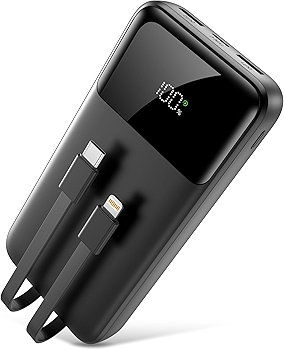 Save 57%
SAIKATI Power Bank 40000mAh with Built-In Cables & LCD Display
 Save 32%
Google Pixel 9a — AI Camera, All-Day Battery, 7-Year Updates
 Save 21%
INIU 45W Ultra Mini Power Bank, 10000mAh Portable Charger
 Save 41%
Samsung Galaxy S21 FE 5G 128GB Unlocked Graphite Renewed
 Save 25%
eucos 62-Inch Phone Tripod with Remote for iPhone & Android
 Save 26%
Charmast Power Bank with Built in Cable — 10,000mAh USB-C Portable Charger with LED Display & 6 Outputs
 Save 80%
 Save 64%