HONOURLIGHT 3000W Power Inverter 12V-120V with LCD & Remote Review 2026: Is it Worth It?

Quick Analysis Verdict
"Good fit for RV, off-grid and emergency users who need a high-surge 12V→120V inverter with remote monitoring; not for buyers requiring a guaranteed pure‑sine output for very sensitive medical or audio equipment."
Review Methodology
Why this analysis may help before you buy
Rating signal
We weigh star rating together with 175 visible reviews so a rating is not judged in isolation.
Buyer momentum
Recent purchase activity and category badges help us identify products shoppers are actively considering.
RefreshBuy score
The score combines performance, quality, value, and ease-of-use signals for this category.
Decision Guide
Is HONOURLIGHT 3000W Power Inverter 12V-120V with LCD & Remote a good fit for you?
For shoppers comparing Car & Vehicle Electronics products, this HONOURLIGHT option looks strongest on performance with a 9.0/10 signal. The main area to double-check is quality, especially if that is your top priority.
Mobile and off-grid power: running microwaves, pumps, shop tools and multiple small appliances from a 12V battery bank in RVs, trucks, boats or emergency backup systems.
limited-but-useful review coverage, 4.5/5 rating, and 50+ recent monthly purchases.
Value score 9.0/10 at $317.64 current tracked price.
Choose it if
You want a Car & Vehicle Electronics pick where the strongest measurable signal is performance and the current review base is large enough to compare with alternatives.
Compare alternatives if
Your buying decision depends mostly on quality, long-term durability, or a lower final checkout price after marketplace changes.
Before buying
Check both Amazon Canada and Amazon US from this detail page, then compare similar Car & Vehicle Electronics products below before deciding.
Mobile and off-grid power: running microwaves, pumps, shop tools and multiple small appliances from a 12V battery bank in RVs, trucks, boats or emergency backup systems.
Great Value
With proper ventilation, correct battery/wiring and normal use expect multi-year service (2–6 years typical); heavy continuous industrial duty may shorten lifespan without heat management.
Key Buying Points
3000W continuous / 6000W peak capability — handles high-startup appliances (microwaves, pumps, shop tools) in real-world RV and off-grid setups without constant overload trips when paired with an adequate battery bank.
LCD monitoring plus remote control — gives live input/output voltage, battery status and protection alerts and lets you power the unit on/off remotely for safer, convenient operation from inside vehicles or homes.
High conversion efficiency (>90%) and very low no-load draw (~1A) — reduces wasted battery energy during standby, extending run time on battery-backed solar or emergency systems.
Five-layer safety protections (OV/UV/overload/short/overheat) with isolation drive — minimizes risk to connected loads and the inverter during typical fault conditions and heavy starts.
Durable aluminum housing and built-in cooling fan — protects internal components from bumps and maintains thermal control for longer continuous operation in mobile environments.
Two AC outlets plus a 2.4A USB port — supports simultaneous basic loads (laptops, chargers, small kitchen appliances) without adapters; simplifies campsite and emergency use.
Includes heavy-gauge battery cables and simple install instructions — many reviewers report straightforward installation in RVs, trucks and off-grid systems with immediate reliable performance.
The Catch
Reported occasional first-time trips under heavy inductive loads — some users needed to reconfigure loads or add soft-start measures after the inverter tripped on initial high-start devices.
Unspecified output waveform in listing — the product does not explicitly state 'pure sine wave,' so some sensitive electronics or medical devices may require a verified pure-sine unit instead.
Limited AC outlet count — only two standard outlets mean you may need external power strips or transfer-switch wiring for broader household replacement scenarios.
Dependency on battery and wiring quality — several reviews note charging/operation issues if cable connections, battery state or grounding aren’t correct; proper installation is critical.
Fan noise and thermal cycling under heavy continuous loads — while described as 'ultra silent,' the cooling fan will ramp up under sustained high load, which could be noticeable in quiet environments.
Performance Scorecard
Common Questions & Expert Insights
Q: Can this inverter run a household microwave or well pump? ▼
Q: Is the output a pure sine wave suitable for audio gear and medical devices? ▼
Q: Will it trip on startup of high inductive loads? ▼
Q: Can I use it with lithium (LiFePO4) battery systems? ▼
Q: Does the inverter connect directly to solar panels? ▼
Q: Is it compatible with RV transfer switches or whole‑house transfer setups? ▼
Q: How do I prevent overheating and fan noise during long runs? ▼
Q: What routine maintenance keeps this inverter reliable? ▼
Q: How does this compare to a portable generator for emergency power? ▼
Q: Is this better than cheaper no-name inverters? ▼
You May Also Like
Top-rated alternatives in Car & Vehicle Electronics

DELLFY M95 4K 4-Channel Dash Cam with GPS, High-Speed WiFi & Supercapacitor
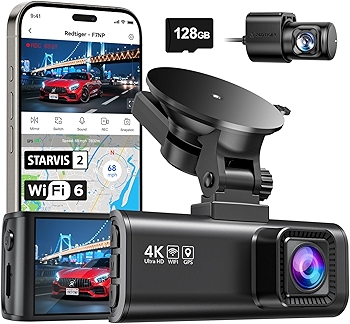
REDTIGER F7NP Dash Cam – Dual-Channel 4K Front + 1080p Rear, GPS, Wi-Fi, Night Vision

Madoec S9 Pro 9-Inch Wireless CarPlay Screen with Dash Cam


 Save 29%
E-YEEGER GT830 4K Front & 1080p Rear Dash Cam with Night Vision
 Save 27%
LENCENT T25 Bluetooth FM Transmitter with Dual USB Charging
 Save 32%